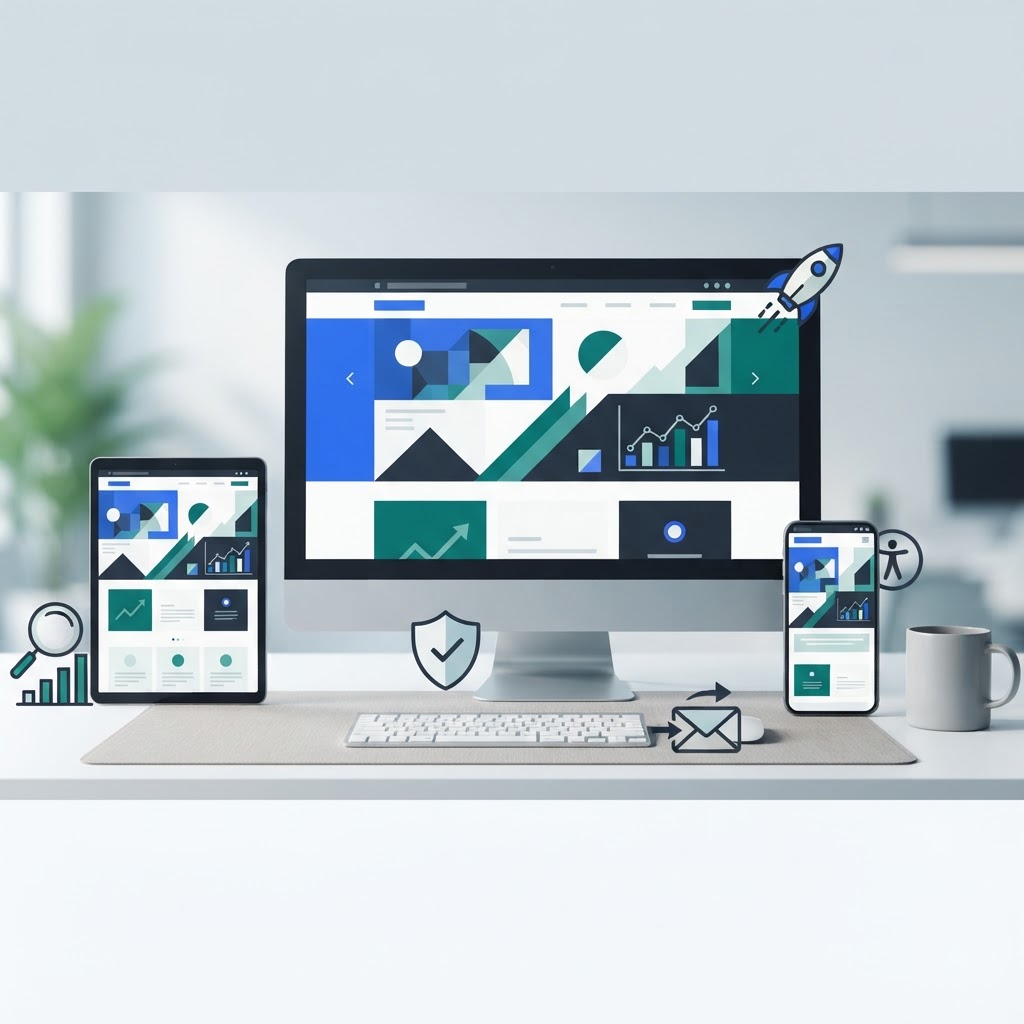
A Beautiful Website Is Only the Beginning
Visual design matters, but a business website must do more than look polished. It should help the right visitors find information, trust your company, and take action. The most effective websites combine clear messaging with reliable technology and a deliberate customer journey.
1. A Clear Value Proposition
The top of your homepage should quickly answer three questions: What do you offer? Who is it for? Why should a customer choose you? Avoid vague slogans that force visitors to guess. Use a direct headline, a helpful supporting statement, and one primary call to action.
2. Simple, Predictable Navigation
Visitors should be able to reach your core services, about information, and contact options without searching. Keep the main menu focused and use familiar labels. On mobile devices, navigation should be easy to open, read, and tap.
3. Dedicated Service Pages
Each major service deserves its own page. This gives you enough space to explain the customer’s problem, your solution, the process, key benefits, and the appropriate next step. Dedicated pages also create stronger opportunities for search engines to match your business with relevant searches.
4. Trust Signals
Customers want evidence before they commit. Testimonials, reviews, certifications, memberships, project examples, guarantees, and clear business information can reduce hesitation. Use authentic proof and place it near important decision points rather than hiding it on a single page.
5. Fast, Mobile-Friendly Performance
A site that loads slowly loses attention and advertising value. Images should be optimized, unnecessary scripts limited, and pages tested on real mobile devices. Responsive layouts should maintain readable text, comfortable spacing, and accessible controls at every screen size.
6. Strong Calls to Action
Every page should make the next step obvious. Depending on your business, that could be “Request a Quote,” “Book a Consultation,” “Call Now,” or “View Services.” Use one primary action consistently, then offer secondary options where they genuinely help.
Forms should request only the information needed to start the conversation. Long, complicated forms create friction and reduce submissions.
7. Search, Security, and Accessibility Foundations
Effective websites are built for both people and technology. Each page needs a descriptive title, logical headings, helpful page copy, image descriptions, and clean links. Secure connections, dependable hosting, software updates, and backups protect the business and its visitors.
Accessibility should be part of the design process. Good color contrast, keyboard-friendly controls, visible focus states, clear form labels, and understandable content improve the experience for everyone.
Turn More Visits Into Opportunities
A high-converting website is not based on one clever design trick. It is the result of many thoughtful decisions that reduce confusion and build confidence. When these seven essentials work together, your website becomes a dependable system for attracting and converting customers.
If your existing site is missing several of these elements, a strategic redesign can improve performance without losing the brand recognition your business has already built.



 Translate